Free trade zones must have a minimum area of 1,000 hectares
The Government has just specified the criteria and conditions for establishing free trade zones, requiring such zones to be favorably located for the development of international trade, logistics, production and services, and to have a minimum area of 1,000 hectares.
Under Decree No. 378/2026/ND-CP of the Government detailing a number of articles and measures for the implementation of the Law on Urban Development, free trade zones must meet criteria on geographical location, scale, socio-economic efficiency, infrastructure, management and operation, and the assurance of national defense and security.
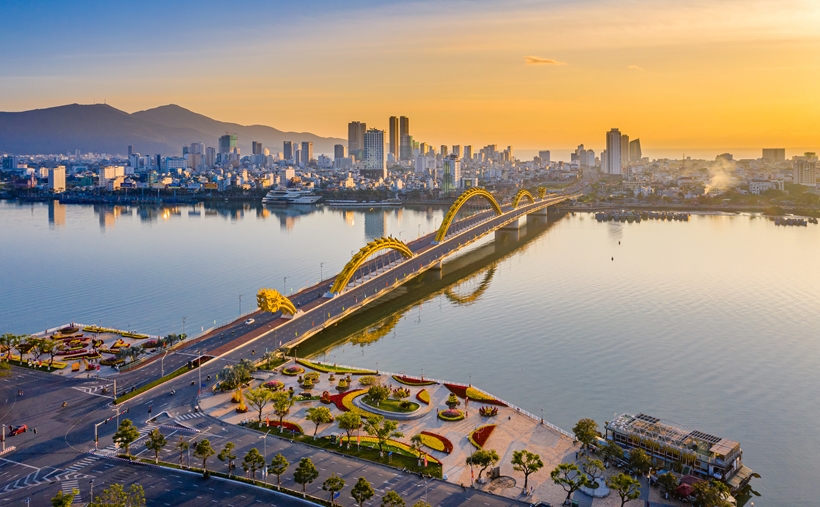
Da Nang City Free Trade Zone – Illustrative photo
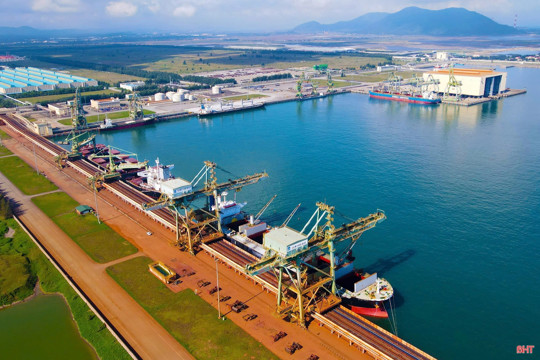
In terms of location, a free trade zone must be attached to, or have direct transport connections with, international seaports, international airports, international financial centers, major international border gates or other strategic logistics infrastructure. At the same time, the zone must be capable of multimodal transport connectivity via at least two of the following modes: road, rail, inland waterway, maritime and air.
The minimum area of a free trade zone is 1,000 hectares. Where a zone is organized into non-contiguous areas, these areas must ensure infrastructure connectivity as well as unified operation and management.
In addition, a free trade zone must ensure socio-economic efficiency and land-use efficiency, and must complement and link with existing economic zones, industrial parks, logistics centers and functional areas. The zone must also have infrastructure and a plan for organizing functional areas in line with its development orientation.
A notable requirement is that a free trade zone must have a feasible management and operation plan, an inter-sectoral coordination mechanism, an inter-agency one-stop-shop mechanism and a management system based on digital data.
Regarding infrastructure, a free trade zone must have, or be capable of investing in, a synchronous system of external transport, internal transport and multimodal connections; power supply, water supply, drainage, and solid waste and wastewater treatment; and telecommunications, information technology, data centers or digital infrastructure.
Furthermore, the zone must be equipped with warehouses and yards, dry ports and facilities serving the export, import and transshipment of goods; as well as facilities for fire prevention and fighting, rescue, safety and security assurance, and specialized inspection and supervision.
Technical infrastructure is required to be invested in phases in line with the development schedule, ensuring connectivity with regional and national infrastructure systems. The Government encourages investment in green, smart and low-emission infrastructure, and requires management, supervision and operation systems to be run on digital platforms that connect and share data with specialized management agencies.
According to the regulations, a free trade zone may be organized into one or more functional areas, such as: integrated logistics areas; industrial parks; trade and service areas; research, development and innovation areas; concentrated digital technology areas and data centers; non-tariff areas; and other functional areas as prescribed by law.
In particular, the establishment of a free trade zone must be associated with requirements for ensuring national defense and security, social order and safety, financial security, cybersecurity and data protection. It must also include measures to prevent and combat smuggling, trade fraud, origin fraud, illegal transshipment, money laundering and high-tech crime, as well as to manage risks and protect the environment.
As for the procedure, the People’s Committee of the province or city shall prepare a report proposing the policy on establishing a free trade zone and submit it to the competent authority for consideration and approval of the policy. Once the policy is approved, the locality shall develop a scheme for establishing the free trade zone.
The state management agency in charge of free trade zones shall consult the Ministries of Finance; Industry and Trade; National Defence; Public Security; and Agriculture and Environment, together with relevant agencies. Within 15 working days of receiving the scheme, these ministries and agencies shall send their comments. Thereafter, within 25 days, the management agency shall be responsible for providing explanations, finalizing the scheme and reporting to the Chairperson of the provincial or municipal People’s Committee for consideration and decision on the establishment.
Where the proposed area affects national defense and security, written consent from the Ministry of National Defence and the Ministry of Public Security is required.
Decree No. 378/2026/ND-CP takes effect from October 1, 2026.