Ha Tinh Targets 50% of Eligible Households Installing Rooftop Solar by 2030
Ha Tinh Targets 50% of Eligible Households Installing Rooftop Solar by 2030
The Ha Tinh Provincial People's Committee has issued Plan No. 563/KH-UBND, dated August 13, 2026, outlining the rollout of rooftop solar power across the province for the 2026–2030 period. The plan aims to increase clean energy consumption, ease pressure on the national grid, and contribute to Vietnam's net-zero carbon goals.
The initiative is anchored in Prime Minister Decision No. 768/QD-TTg, issued on April 15, 2025, which approved the National Power Development Plan for 2021–2030, with a vision to 2050. It also builds on Prime Minister Directive No. 10/CT-TTg (dated March 30, 2026) and Provincial People’s Committee Plan No. 236/KH-UBND (dated May 2, 2026) regarding energy conservation and rooftop solar development for 2026.
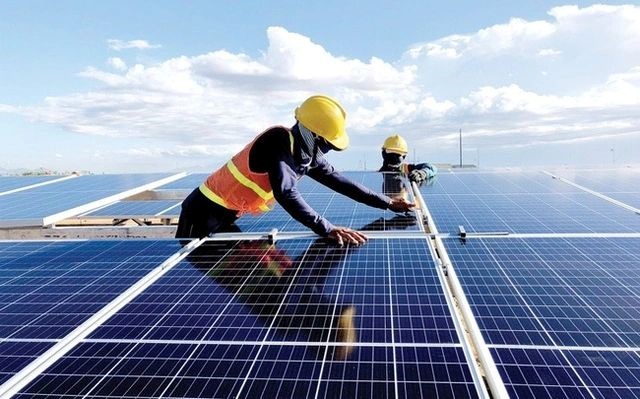
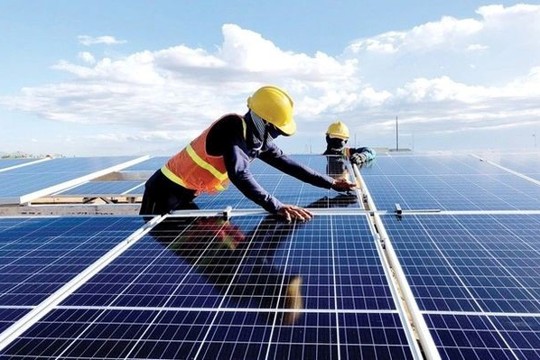
Rooftop solar panels are installed to meet self-production and self-consumption electricity needs.
Over 223 MW of Remaining Growth Potential
According to current assessments, as of June 30, 2026, the province had 801 rooftop solar power systems in operation, with a total installed capacity of 158.466 MWp (approximately 134.696 MW). Within the scope of Power Development Plan VIII (PDP8), 158 systems totaling 105.28 MWp (around 89.488 MW) have been commissioned—reaching about 28.6% of the 313 MW target allocated by 2030, leaving a remaining growth potential of 223.512 MW.
For government facilities, only 10 out of 886 headquarters have installed rooftop solar arrays (1.13%), leaving 433 additional sites required to meet the 50% target by 2030. In the residential sector, 633 households currently have installations (roughly 0.14% of the total); reaching the goal will require rolling out systems to approximately 226,725 more homes across the province.
During the peak heatwave of 2026, maximum load capacity in Ha Tinh reached 501.9 MW. Despite the surge, the power system operated safely and stably, supported significantly by operational rooftop solar systems. These installations provided localized generation, trimmed peak load demand, eased grid strain, and enhanced power supply reliability.
However, the plan also outlines several key challenges: high investment costs, particularly for energy storage systems; limited public funding and financial support mechanisms; physical constraints on certain buildings (small roof area, weak structures, or unfavorable angles); and limited awareness among some residents and businesses regarding financial returns.
Capping Total Capacity at the Allocated 313 MW Target
Regarding specific objectives, the plan outlines that grid-connected rooftop solar development must comply with current regulations and strictly ensure the province's total installed capacity does not exceed the 313 MW quota allocated under the revised Power Development Plan VIII (PDP8) and any subsequent amendments.
The province strives to achieve by 2030 having 50% of eligible government offices and public administrative units equipped with self-consumption rooftop solar systems, while also aiming for 50% of eligible households under applicable laws to install self-consumption systems or meet the annual capacity targets allocated by the Provincial People's Committee.
The plan applies to provincial departments, agencies, commune- and ward-level People's Committees, Ha Tinh Power Company, the Provincial Economic Zone Authority, as well as agencies, units, enterprises, cooperatives, organizations, households, and individuals involved in investing, installing, managing, operating, or using rooftop solar systems within the province.
Allocating Phase 1 Capacity Quota of 81 MW to Households
Along with the master plan, the Provincial People's Committee issued an Appendix allocating the Phase 1 rooftop solar capacity quota for households during the 2026–2027 period to commune- and ward-level People's Committees, assigning a total capacity of 81 MW across 69 communes and wards.
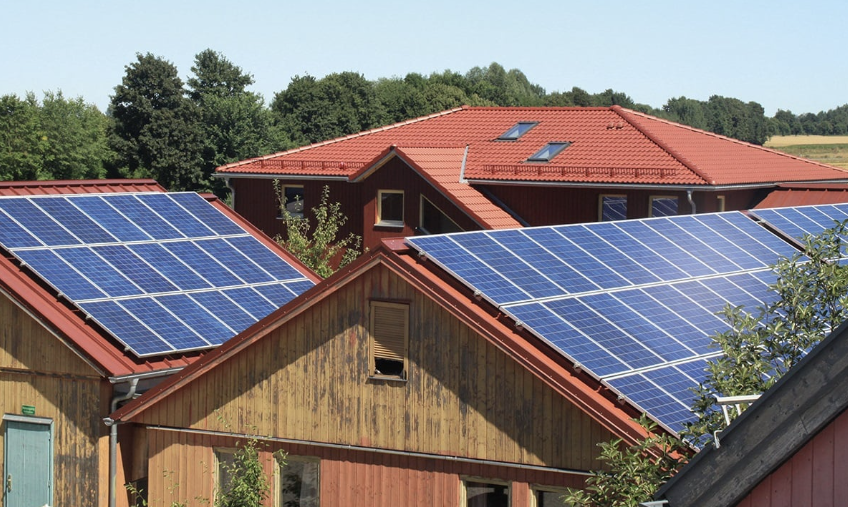
Rooftop solar adoption grows among Ha Tinh households, driven by economic and environmental gains.
The capacity quota was determined based on the number of households with an average electricity consumption of 400 kWh per month or higher (51,170 out of 454,715 electricity-consuming households statewide), combined with local grid absorption capacity and site-specific conditions; it is not a mandatory requirement for individual households.
Seven Priority Task Groups
The plan outlines seven core task groups, including: reviewing, formulating, and refining mechanisms and policies; tasks under Power Development Plan VIII (PDP8); tasks targeting government facilities; tasks targeting households; upgrading grid infrastructure and driving digital transformation; conducting awareness campaigns, training, and capacity building; and ensuring technical safety requirements.
Under this framework, the province will research and advise on introducing localized incentive mechanisms and support policies—such as interest rate subsidies, streamlined administrative procedures, and technical assistance—to stimulate investment in self-consumption rooftop solar systems. The province will also accelerate installation on industrial roofs and facilities within the Vung Ang Economic Zone, industrial parks, and industrial clusters, tightly integrated with strict construction safety and fire prevention controls.
For public facilities, investment in rooftop solar will be integrated with public investment capital, operational expenditure, or building maintenance and renovation budgets. Selected government offices, schools, and hospitals with favorable physical conditions will be chosen for pilot models to evaluate real-world efficiency before scaling up province-wide.
Regarding infrastructure, the province will invest in renovating and upgrading medium- and low-voltage power grids in high-potential areas; regularly publish transparent, publicly accessible updates on the grid's capacity to absorb and discharge power across specific zones and transformer stations to enable proactive investment planning by residents and businesses; and develop a database and digital map depicting grid absorption capacity. Ha Tinh's power grid system currently possesses an estimated absorption capacity of 626.94 MW.
Diversifying Resources, Promoting the ESCO Model
Funding for the plan will be mobilized from the state budget according to decentralized allocations, capital from enterprises, cooperatives, and households, socialized funding, green credit, and other legally compliant sources.
The province encourages enterprises, financial institutions, Energy Service Companies (ESCOs), and various economic sectors to invest, form joint ventures, or provide service-based investment solutions for rooftop solar development. Additionally, Ha Tinh will strengthen coordination with financial institutions to expand access to green credit programs, facilitating favorable borrowing terms for investing organizations and individuals.
The Ha Tinh Provincial People's Committee has assigned the Department of Industry and Trade to lead and coordinate with relevant departments, sectors, localities, and units to execute the plan; act as the focal point for monitoring, urging, and synthesizing implementation progress; and submit reports to the Provincial People's Committee and the Ministry of Industry and Trade annually prior to December 15, or on an ad-hoc basis upon request.