Approval Granted for Master Plan Adjustment of Vung Ang Economic Zone Through 2050
Approval Granted for Master Plan Adjustment of Vung Ang Economic Zone Through 2050
On August 5, 2026, Permanent Deputy Prime Minister Pham Gia Tuc signed Decision No. 1487/QD-TTg approving the Master Plan Adjustment for the Vung Ang Economic Zone in Ha Tinh Province through 2050. This decision completely replaces Decision No. 1076/QD-TTg issued in 2007 and subsequent partial adjustments for the economic zone. Covering an area of 22,781 hectares, the zone's population is projected to reach nearly 250,000 by 2050.
According to the decision, the planning scope encompasses the entire Vung Ang Economic Zone, spanning 22,781 hectares. This includes the entirety of Vung Ang and Hoanh Son wards, alongside portions of Song Tri and Hai Ninh wards. Geographic boundaries are set as follows: bounded by the East Sea to the north and east, Quang Tri Province to the south, and Ky Khang, Hai Ninh, and Song Tri communes and wards to the west.
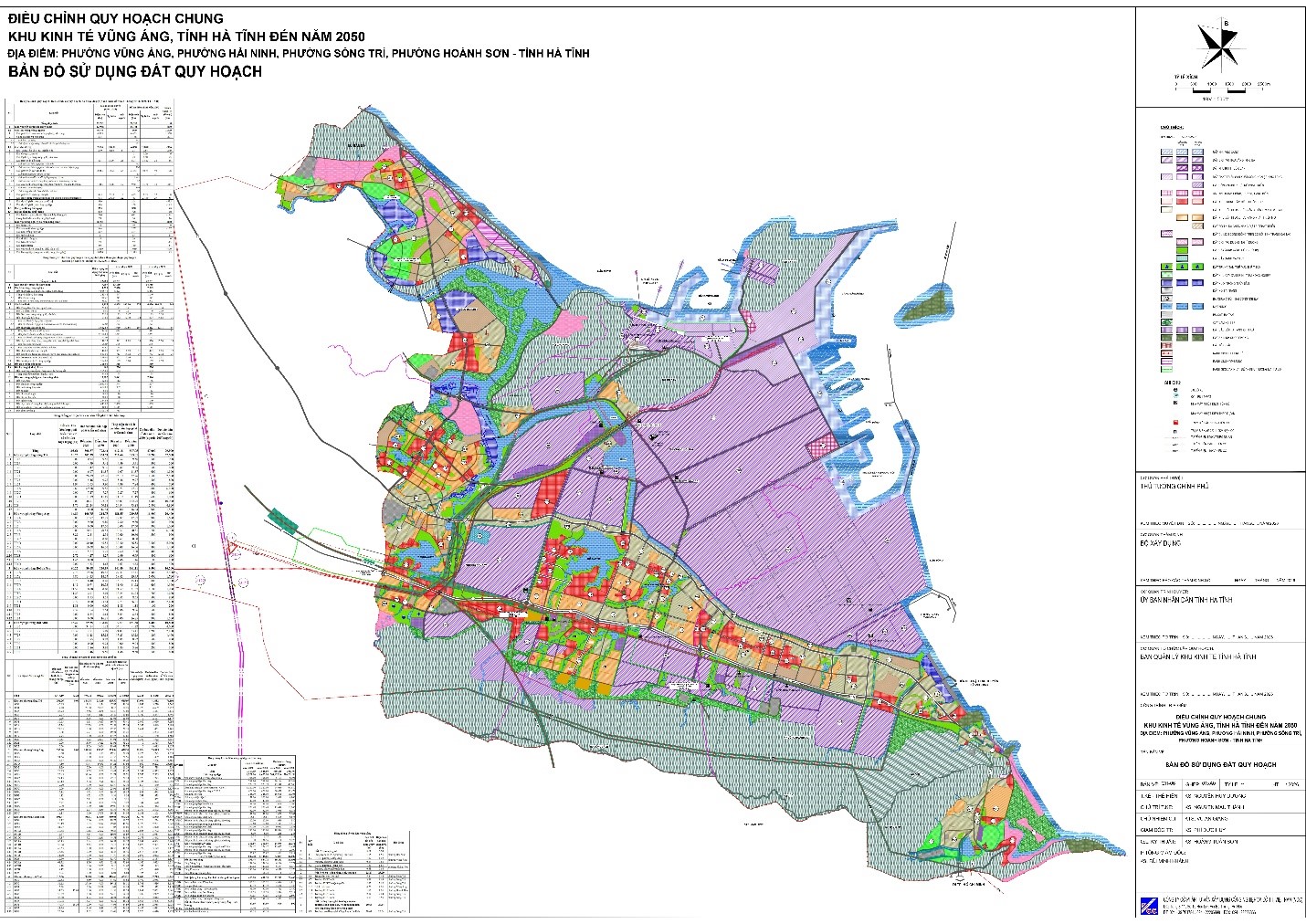
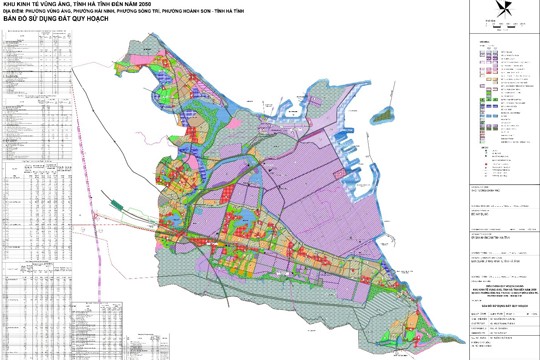
Master Plan Map of Vung Ang Economic Zone
In terms of population size, the plan projects the economic zone's population to reach approximately 181,000 by 2030 and increase to roughly 249,000 by 2050—a figure reflecting expectations of a complete industrial and service urban area rather than a mere production base. Correspondingly, land designated for construction will reach 13,139 hectares by 2030 (accounting for 58% of the natural land area) and expand to 14,785 hectares by 2050 (65%).
From a Single-Function Industrial Zone to a Multi-Sector Growth Pole
Decision No. 1487/QD-TTg positions the economic zone's role with a more comprehensive, modern, and high-spillover nature compared to the orientation established in the 2007 master plan.
Under the new orientation, Vung Ang Economic Zone is defined as a growth pole and socio-economic driver for Ha Tinh Province and the North Central Coast region; a major national and regional center for industry and energy; an international logistics and freight transshipment hub; and the urban core of Ha Tinh’s southern region featuring modern technical and social infrastructure that balances industrial, urban, and ecological spaces.
Compared to the 2007 plan, which focused primarily on heavy industry tied to deep-water ports, the Vung Ang Economic Zone Master Plan through 2050 broadens its vision around four parallel development pillars: industry – seaports – logistics – service urbanism. This represents a key shift in planning philosophy aligned with modern global trends for coastal economic zones—where the goal extends beyond building manufacturing centers to establishing a fully connected, self-sustaining, and sustainable economic ecosystem.
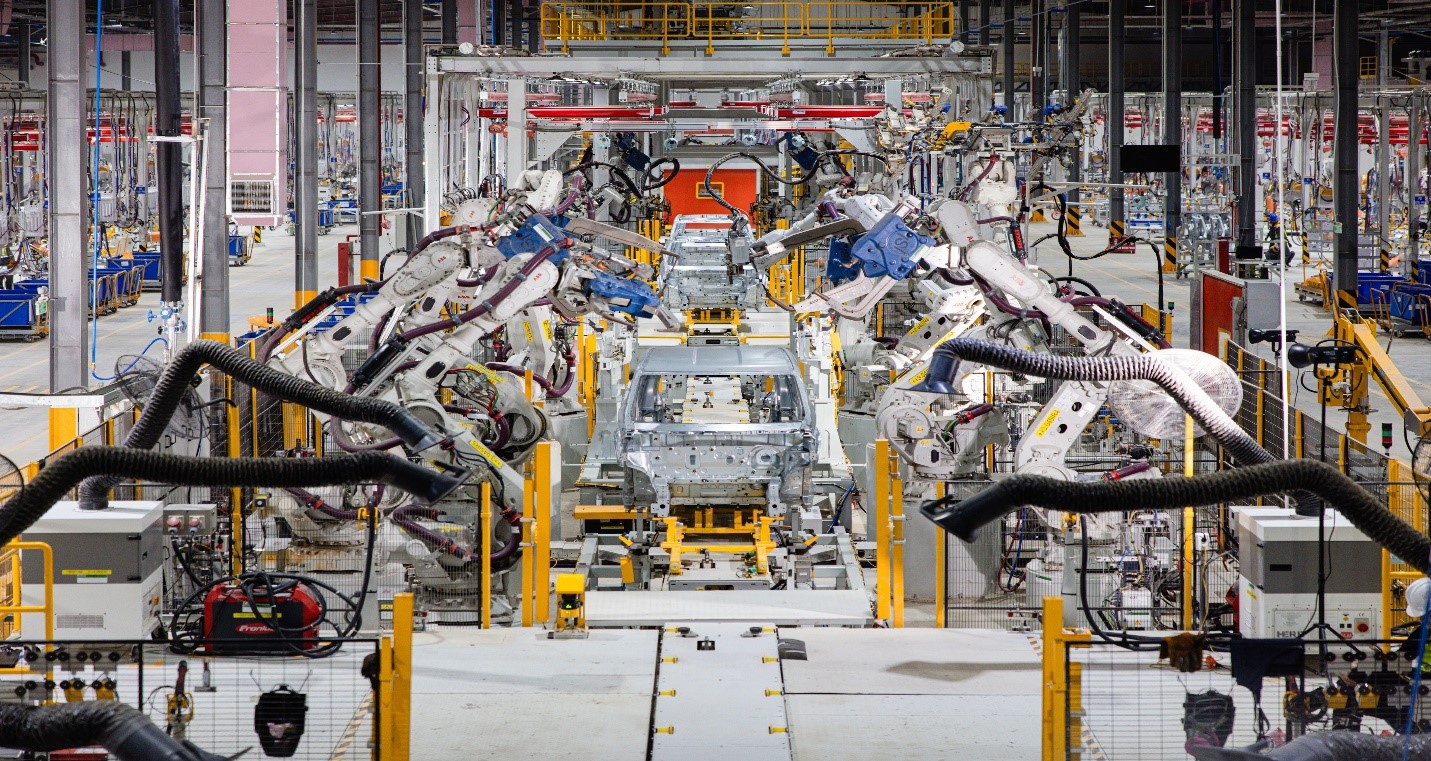
Automated robot system at the VinFast electric vehicle factory
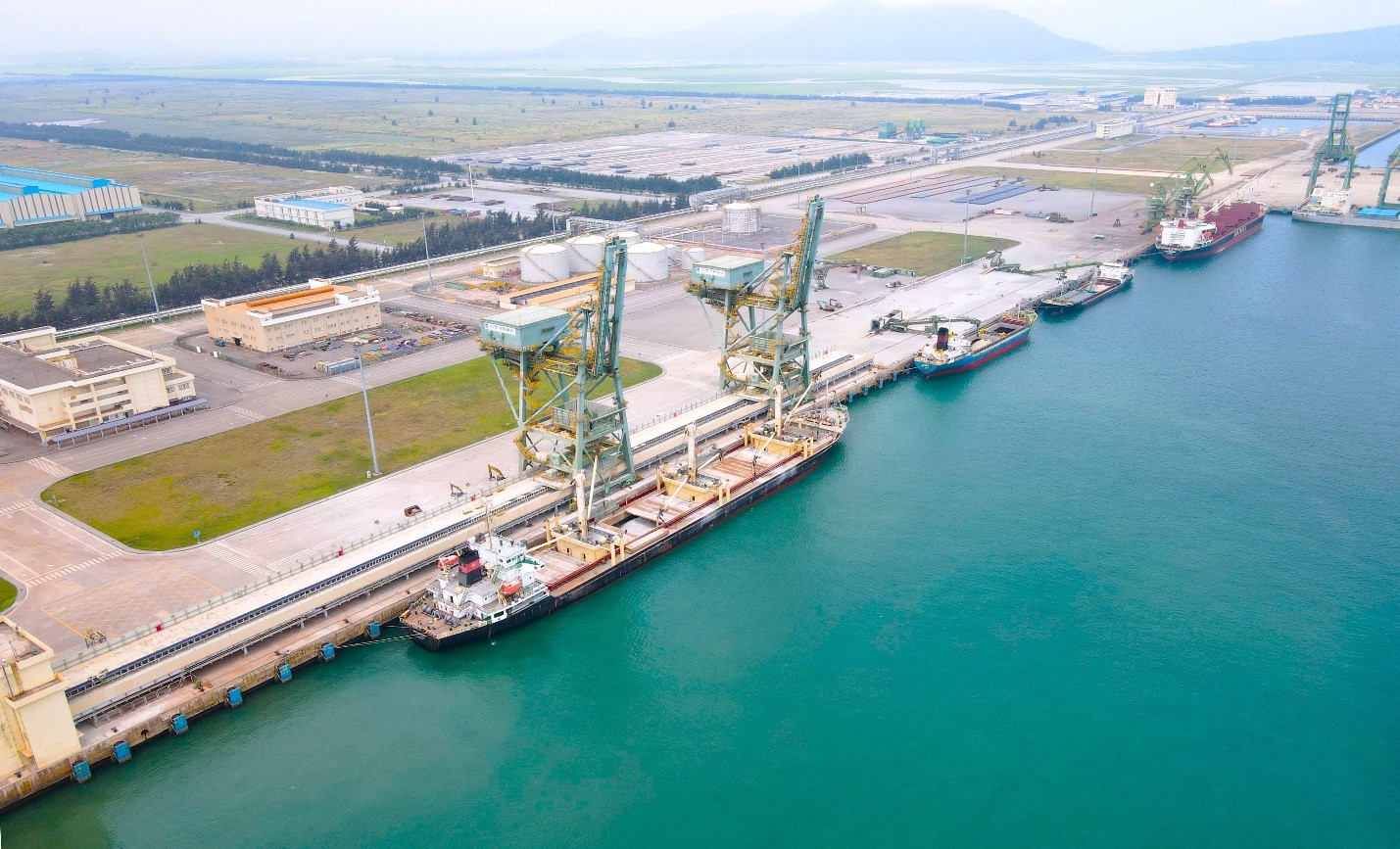
Son Duong Port
Five Main Functional Sub-zones: A New Spatial Architecture
The spatial organization of the Vung Ang Economic Zone is structured into five main functional sub-zones, arranged to maximize geographic advantages while minimizing functional conflicts:
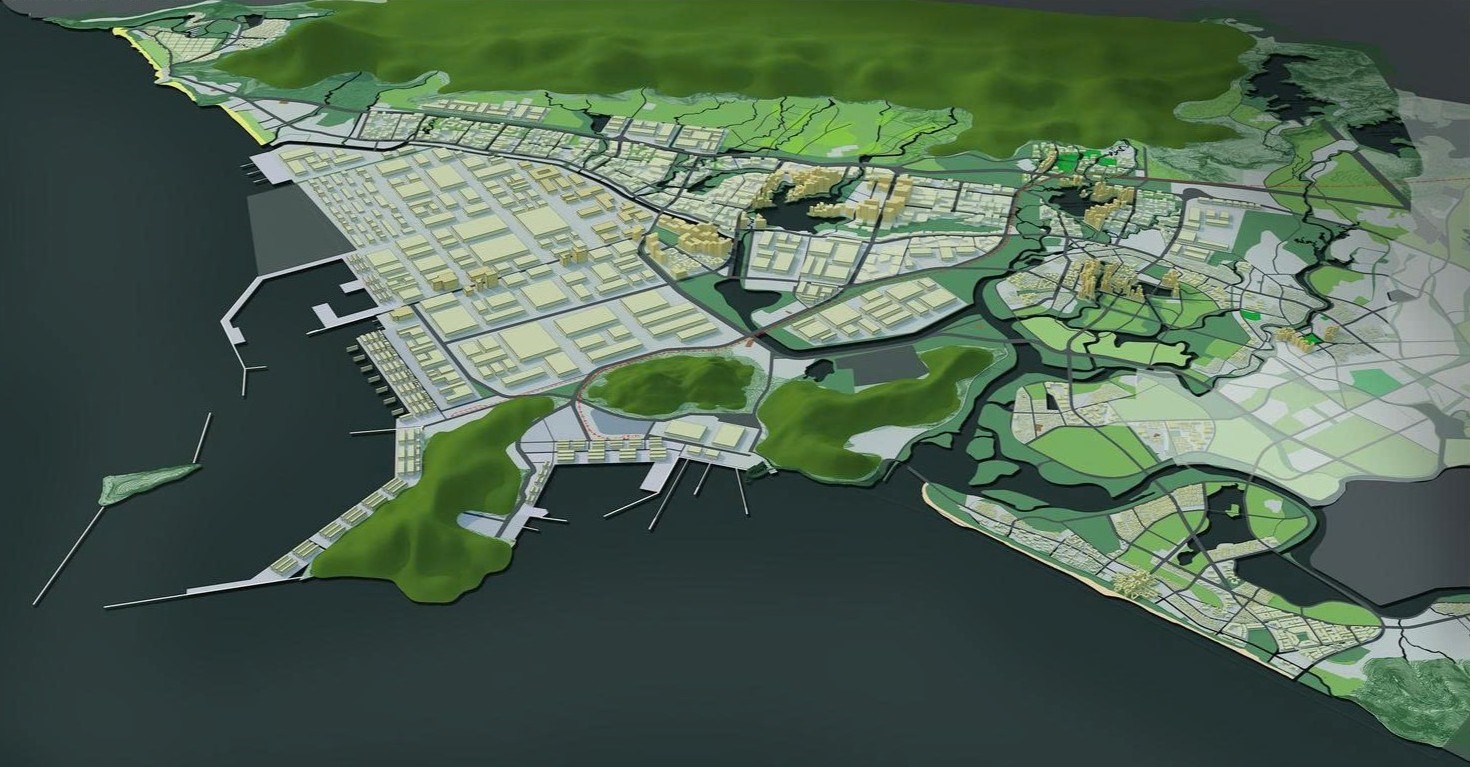
Overall Perspective of Vung Ang Economic Zone
- Industrial and Seaport Zone: Remains the central core, developing in tandem with the Vung Ang – Son Duong port system to form industrial clusters for metallurgy, energy, manufacturing, recycling, and supporting industries.
- Logistics and Port Support Services Zone: Developed alongside the Vung Ang – Son Duong port cluster and seamlessly connected to external transport networks, aiming to establish a national and internationally connected logistics hub.
- Urban and Service Center Zone: Situated in the Song Tri and Tau Voi Lake areas, as well as west of the industrial zones. It focuses on developing multi-functional urban areas that integrate housing, commercial services, public spaces, and waterfront landscapes to satisfy the residential and service needs of workers and experts.
- Coastal Tourism and Services Zone: Concentrated in the Hai Ninh – Hoanh Son areas and favorable coastal stretches, focusing on resort tourism and coastal eco-tourism through the sustainable exploitation of natural assets.
- Ecological, Greenery, and Water Spaces: Natural ecosystems are preserved in the western mountainous regions, along rivers, lakes, and coastal lines—creating ecological corridors and green buffer zones between industrial complexes and residential areas.
Connectivity Infrastructure: The Foundation for a Long-Term Vision
Decision No. 1487/QD-TTg devotes a significant portion of its contents to technical infrastructure orientations, reflecting a clear recognition that robust infrastructure is a prerequisite for realizing the plan's strategic goals.
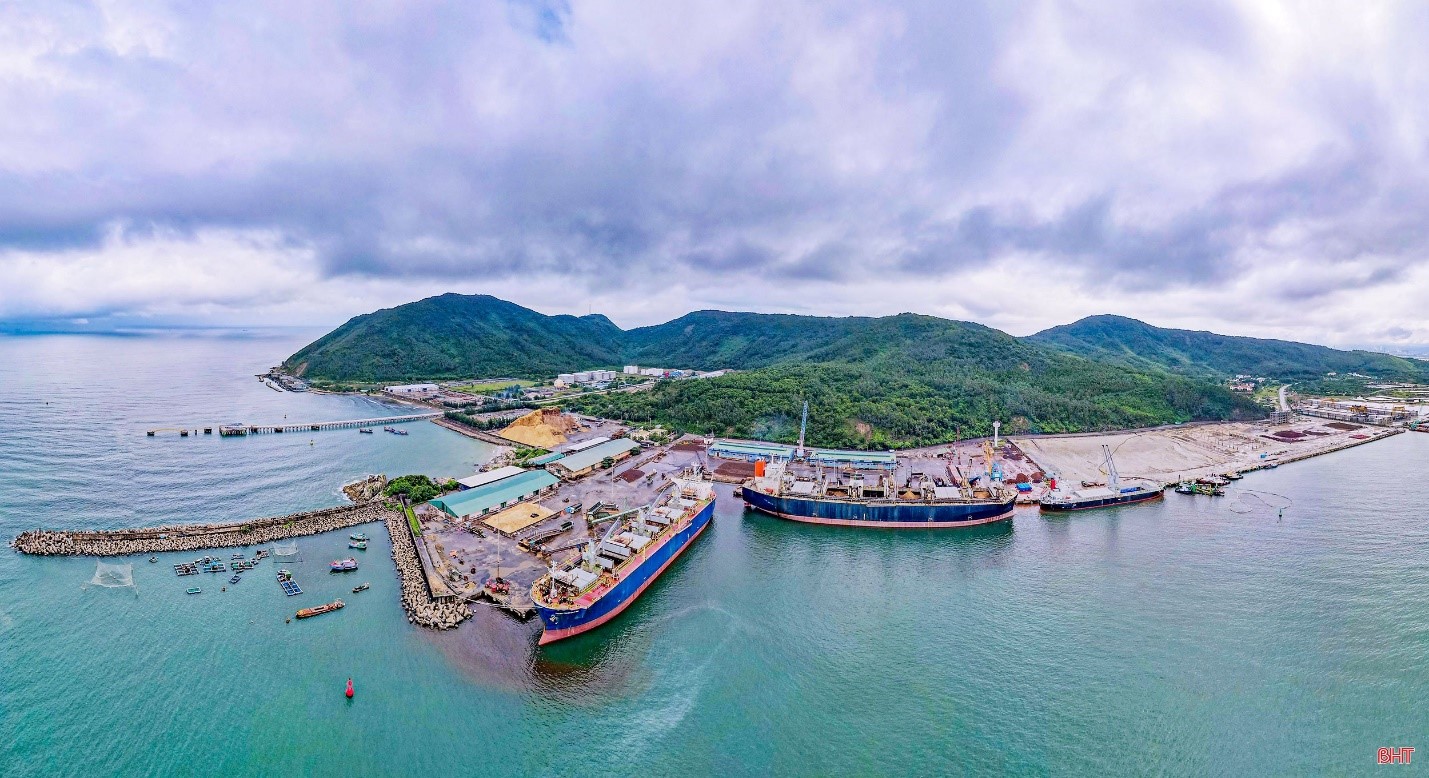
Vung Ang Port (Photo: Ha Tinh Newspaper)
Regarding external transport, the plan directs investment into the construction of the Vung Ang – Mu Gia Railway, connecting the Vung Ang – Son Duong port cluster with Laos. This will progressively establish a multimodal transport corridor linked to Northeast Thailand—an infrastructure line of immense geoeconomic significance that enables Vung Ang to serve as a genuine export gateway for goods from Laos and the Greater Mekong Subregion.
The North–South High-Speed Railway line traversing the Economic Zone is also incorporated into the plan. For road infrastructure, key connections to the North–South Expressway, National Highway 12C, and the coastal road will be upgraded.
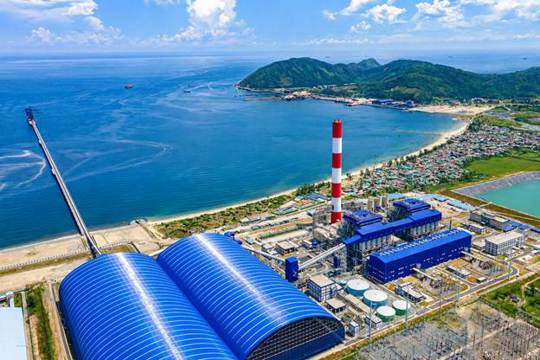
Regarding power supply, the plan outlines the development of a large-scale power generation system within the Economic Zone. This includes the Vung Ang 1 (1,200 MW) and Vung Ang 2 (1,330 MW) thermal power plants currently in commercial operation; the Vung Ang 3 LNG-fired thermal power plant (1,500 MW), with its first unit scheduled for operation in Q1 2031; and long-term plans to build two additional LNG power plants. For water supply, the plan envisions building the Vung Ang 3 Water Plant with a capacity of $90,000\text{ m}^3/\text{day}$, expanding the zone's total water capacity to meet demand through 2050.
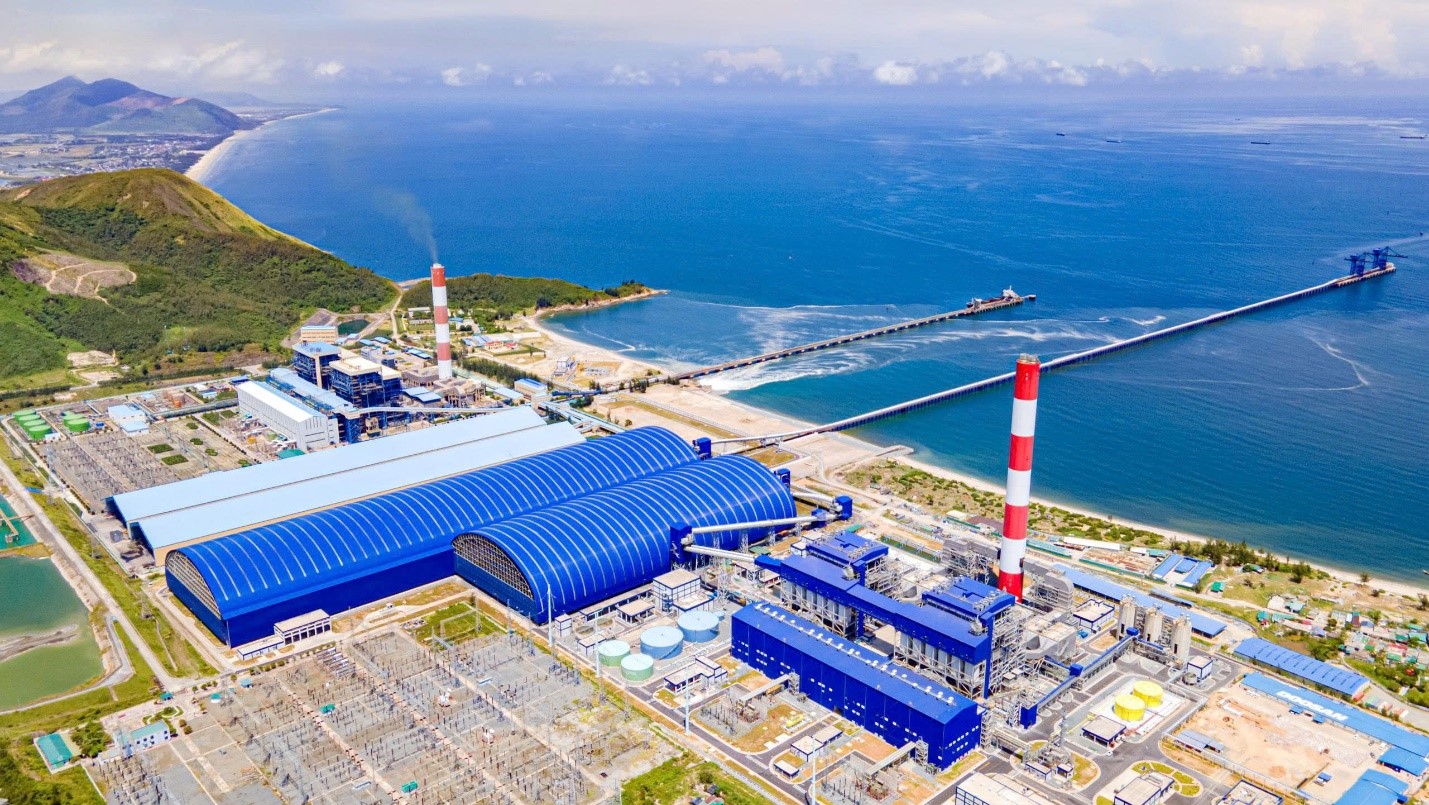
Vung Ang 1 and Vung Ang 2 Thermal Power Plants
Establishing a New Legal Framework and Unlocking Long-Term Growth Space for Vung Ang
Decision No. 1487/QD-TTg is not merely a technical planning document, but a crucial policy signal demonstrating the Government’s consistent orientation in establishing the strategic role of the Vung Ang Economic Zone for long-term development. Approval of the new plan confirms Vung Ang’s position as a priority growth zone, backed by a clear long-term vision, defined orientation, and a unified legal framework to attract strategic investment capital.
By completely replacing all previous master plans, Decision No. 1487/QD-TTg creates a unified legal corridor for implementing large-scale projects and development programs in the coming period. Key priorities include establishing a free trade zone, a national-level logistics hub, next-generation industrial zones, urban-service areas catering to experts and workers, and core infrastructure networks with inter-regional and international connectivity.
This serves as a crucial foundation for Vung Ang Economic Zone to transition toward in-depth development. Rather than relying solely on existing advantages in seaports, heavy industry, and geographical location, the economic zone aims to create new competitive advantages amidst evolving regional economic structures, supply chains, and global investment flows.