Ha Tinh: Creating New Development Space to Attract High-Quality Capital
The adjusted Provincial Master Plan for the 2021–2030 period, with a vision to 2050, has more clearly defined Ha Tinh’s development space, closely linking its sectors, fields and economic corridors.
The adjusted master plan marks a strategic turning point and helps the province unlock its potential, release resources and open up new development space to attract high-quality investment capital.
Expanding the "Five Regions, Four Corridors" Space
On the afternoon of 17th August, the People’s Committee of Ha Tinh province held a conference to announce the adjustment of the Provincial Master Plan for the 2021–2030 period, with a vision to 2050.
The adjusted plan has proactively removed content that is no longer suitable and incorporated modern development thinking, aiming for an average GRDP growth rate of at least 10% per year during the 2026–2030 period.
The province’s development space has been reorganised under a model of five socio-economic regions, four economic corridors, three strategic urban areas and four development axes. Notably, the addition of an integrated marine economic zone and marine ecological conservation area extends the province’s development space beyond its mainland boundaries.
The northern region focuses on urban development, tourism, culture and riverside and coastal services. The central region assumes the role of administration, services and science and technology. The southern region is the space for industry, energy, seaports and logistics. The western mountainous region is positioned for ecological economy, sustainable agriculture and forestry, and green tourism. The marine economic zone concentrates on fishing, aquaculture, renewable energy, marine tourism and research into suitable sea reclamation areas.
The entire province is connected synchronously by four economic corridors: the coastal driving-force corridor, the East–West economic corridor, the ecological corridor and the southern border linkage corridor. By 2030, Ha Tinh aims to have 15 urban areas and one new urban area, including two Class II and 14 Class III urban areas; GRDP per capita of VND 180–185 million; and a digital economy accounting for 20% of GRDP. With a vision to 2050, Ha Tinh will become one of the country’s relatively developed provinces and a centre of industry, energy and logistics associated with a modern seaport system.
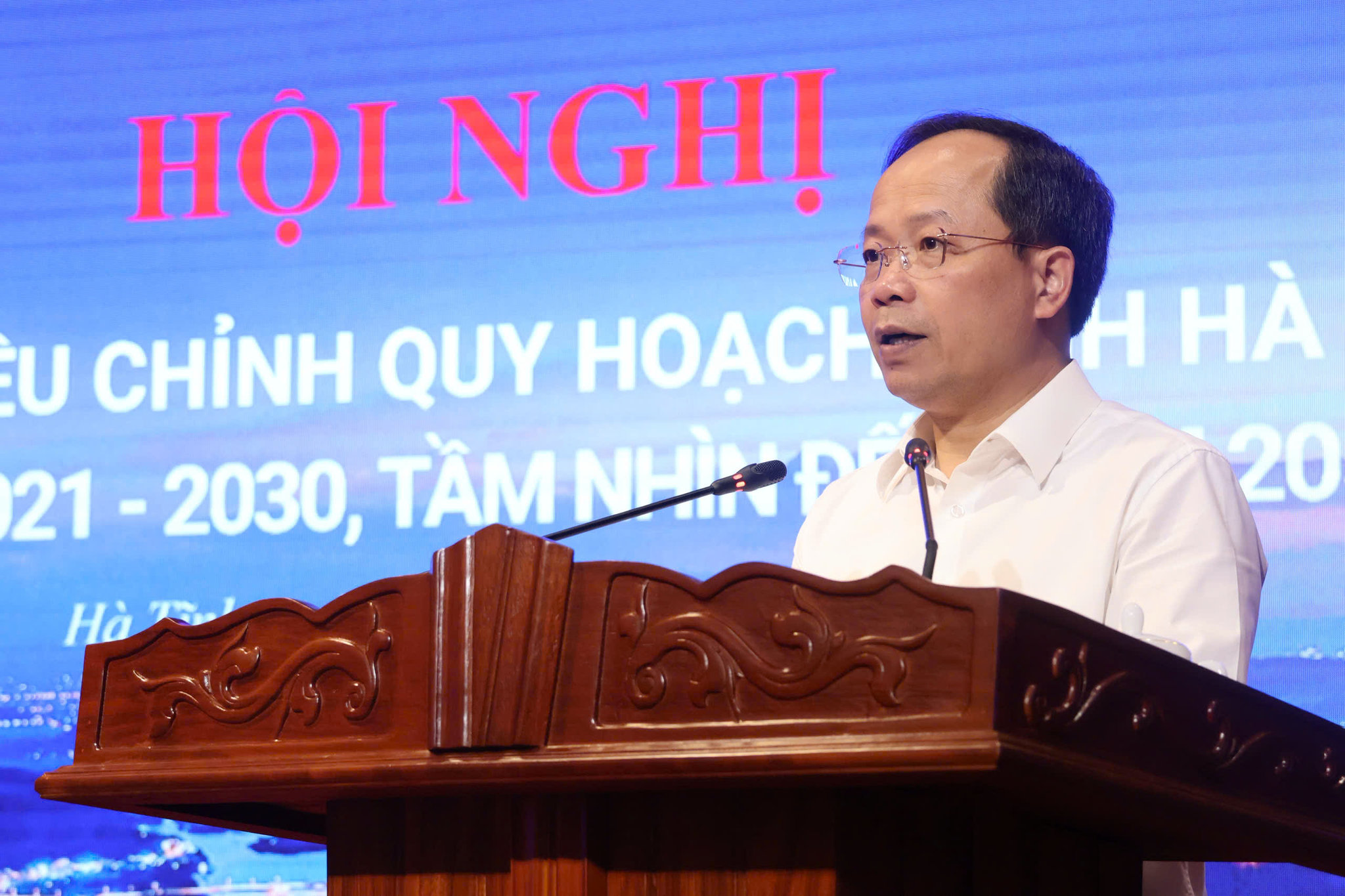
Secretary of the Ha Tinh Provincial Party Committee Nguyen Duy Lam ensures that the master plan will more clearly define Ha Tinh province
Speaking at the conference, Secretary of the Ha Tinh Provincial Party Committee Nguyen Duy Lam stressed that the master plan reflects great aspirations but demands very high determination in implementation. The Provincial Party Secretary requested that, immediately after the conference, Party committees and authorities at all levels urgently translate the plan into a list of key projects, mobilise resources to the fullest, renew their methods of leadership and direction, and regularly review and remove difficulties for enterprises.
Secretary Nguyen Duy Lam also called on investors to implement their projects on schedule and effectively, to continue expanding investment, and to connect partners to come and explore, produce and do business in Ha Tinh.
Vung Ang Economic Zone – A "Lever" Opening New Space for Enterprises
In addition to expanding development space, the adjusted master plan clearly identifies key economic sectors. The leading sectors driving growth comprise processing and manufacturing industries, energy, and seaports and logistics. New potential sectors include the digital economy, green industry, the data industry and smart agriculture.

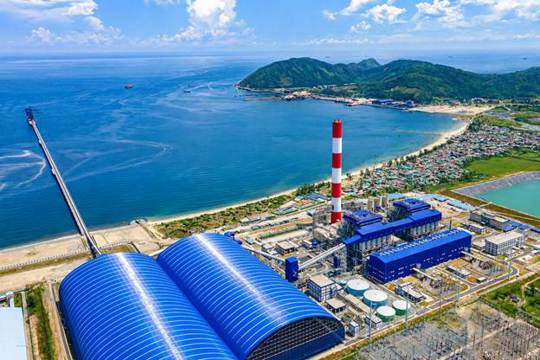
Vung Ang I Thermal Power Plant
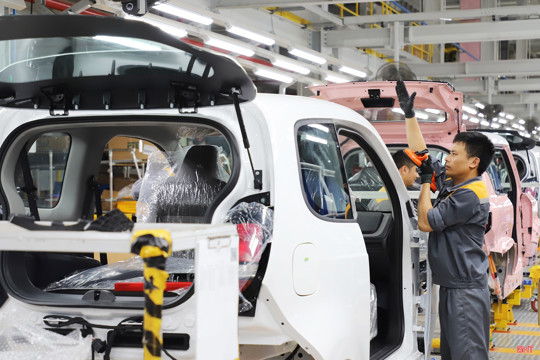
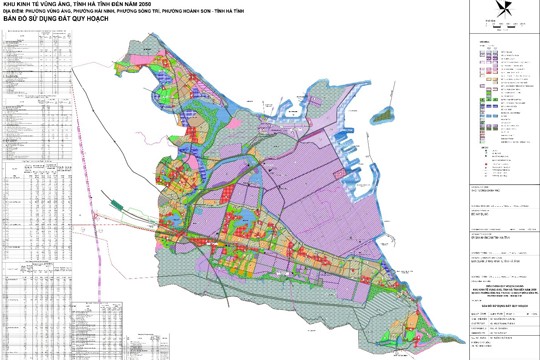
Within this new development space, Vung Ang Economic Zone continues to hold the central position of the southern driving-force region, with its area expanded to approximately 72,998 hectares. The plan orients the development of a diversified industrial ecosystem covering metallurgy, mechanical engineering, automobile and motorcycle manufacturing, components, and shipbuilding and repair.
At the same time, the plan adds orientations on researching the establishment of a Vung Ang Free Trade Zone and an Ecological Industry–Energy Centre, promoting an international artificial intelligence (AI) data centre, and developing Vung Ang–Son Duong Port into a large-scale industrial, energy and logistics hub for the region and the whole country.
Mr Nguyen Anh Thang, Chairman of the Ha Tinh Provincial Business Association and General Director of Ha Tinh Minerals and Trading Joint Stock Corporation (MITRACO), assessed that the adjusted Ha Tinh Provincial Master Plan for the 2021–2030 period, with a vision to 2050, is an important milestone that opens up new development space for Ha Tinh. From this, the business community also sees very significant room for production, business and investment.
Firstly, there is the opportunity to participate more deeply in the production and service ecosystem at Vung Ang Economic Zone and in green and ecological industrial clusters. The expansion of the economic zone and the development of key industries will generate very large demand for supporting industries, construction, mechanical engineering, transport, logistics and ancillary services.
Secondly, there is the opportunity to expand markets thanks to the reorganisation of economic regions and corridors. In particular, the East–West economic corridor connecting Laos and Thailand through the Cau Treo International Border Gate to Vung Ang–Son Duong will create strong breakthrough potential for warehousing, transport, border-gate trade and goods supply services.
Thirdly, there are opportunities arising from new economic sectors. The province’s promotion of the digital economy, green industry, artificial intelligence and the data industry will open up new products, markets and business models, enabling Ha Tinh enterprises to take part in high-growth value chains.
Mr Thang stated: "The adjusted master plan sets a target of 18,000 to 20,000 operating enterprises by 2030, and regards the development of local enterprises as a central task associated with Resolution No. 68 and Resolution No. 79."
Mr Thang emphasised that enterprises must take the initiative in improving their governance capacity, innovating technology, and meeting environmental and digital transformation standards in order to participate deeply in supply chains. For its part, the Provincial Business Association will strengthen the connection of its members with large corporations, promote chain linkages, and promptly compile difficulties and obstacles to report to the authorities.
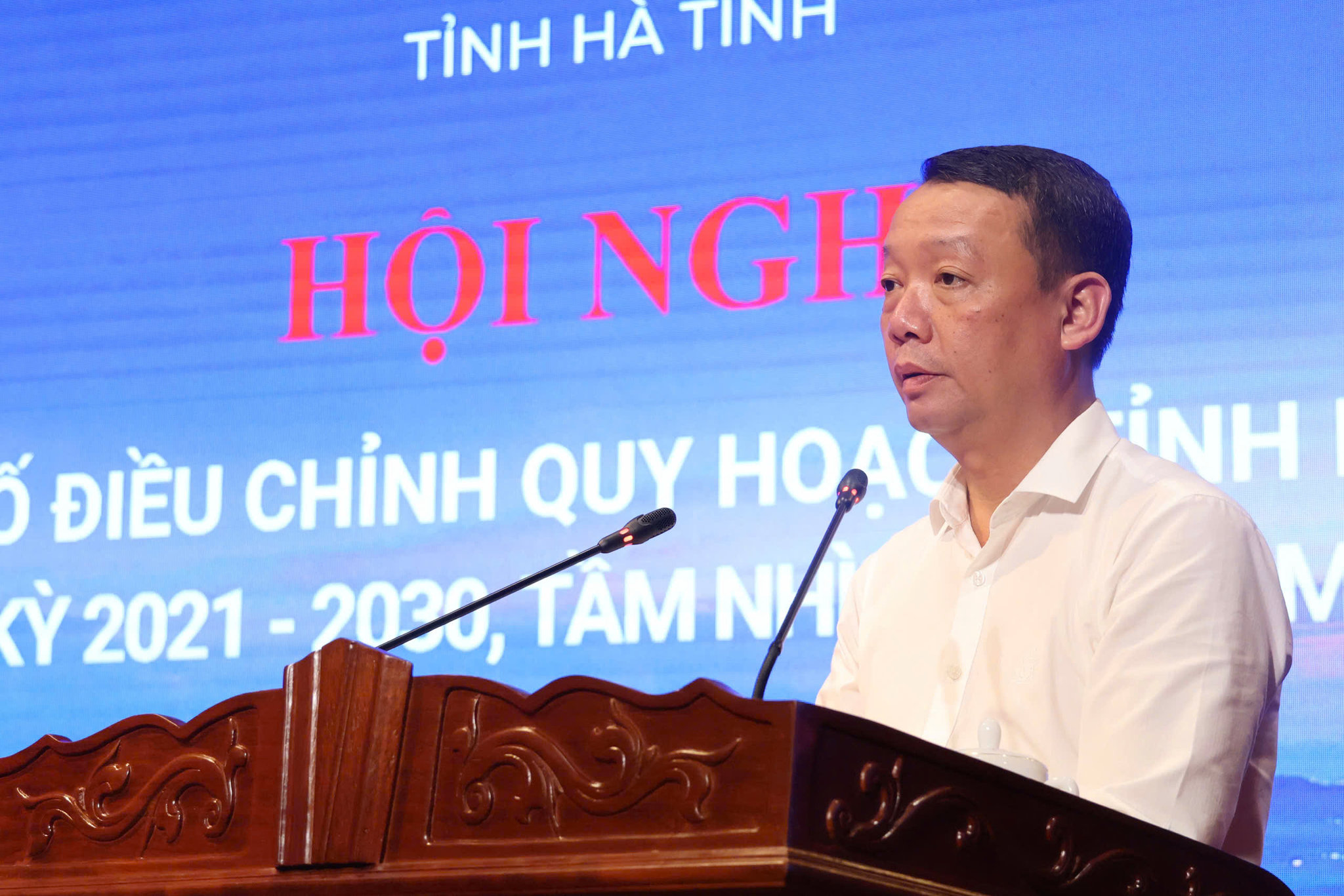
Chairman of the Ha Tinh Provincial People’s Committee Phan Thien Dinh delivers the concluding remarks at the conference.
Turning the Master Plan into a Development Resource
Under the adjusted master plan, Ha Tinh has added five key tasks: (1) improving the effectiveness and efficiency of governance and the business and investment environment; (2) continuing to accelerate the restructuring of the growth model; (3) developing enterprises and enhancing the role of local businesses, in which the state economy plays the leading role and the private economy is an important driving force; (4) developing people and human resources and ensuring social welfare; and (5) strengthening cooperation, linkage and integration in association with safeguarding national defence and security.
At the same time, the province is concentrating on three strategic breakthroughs: accelerating comprehensive digital transformation across three pillars (digital government, digital economy and digital society) and public governance; developing high-quality human resources; and developing synchronous, modern infrastructure to attract strategic projects.
In order for the business community to genuinely take part in implementing the master plan, Chairman of the Ha Tinh Provincial Business Association Nguyen Anh Thang held that the province needs to translate the plan into readily accessible investment information, and to ensure publicity and transparency regarding development space, land funds, infrastructure and the list of projects. The province also needs to continue removing administrative procedures relating to land, construction and site clearance, as well as issuing substantive support policies to help domestic enterprises enhance their capacity and connect with major investors and FDI projects.
Speaking at the conference on the afternoon of 17 August, Chairman of the Ha Tinh Provincial People’s Committee Phan Thien Dinh affirmed that the Provincial People’s Committee will devote the highest level of focus to successfully implementing the master plan, taking the development of enterprises and the convenience of citizens as the measure of administrative effectiveness. The province is committed to making the master plan database public and to issuing an implementation programme within August 2026.
The Chairman of the Provincial People’s Committee stressed that the province will continue to restructure public investment in a focused and targeted manner in order to activate social resources, promote public–private partnerships (PPP), and attract FDI and ODA capital. The province is making a strong shift in mindset from "investment promotion" to "accompanying projects to success", proactively reviewing and removing obstacles for each driving-force project.
At the same time, Ha Tinh is committed to giving priority to investors with financial capacity and modern technology, resolutely handling projects that are behind schedule or that occupy land unproductively, and firmly refusing to trade the environment and social welfare for short-term growth.
With its new development space, increasingly complete infrastructure and a continuously improving investment environment, Ha Tinh will gain further momentum for rapid and sustainable growth, contributing to making the province an important growth pole of the North Central region and of the country as a whole.